

The magic wand fallacy
We see it constantly. A business struggles with sales. Leads are slipping through the cracks. Revenue is unpredictable. The sales team is working on spreadsheets, sticky notes, and memory.
So, the Directors have a meeting. They decide that the solution is technology. They buy a subscription to HubSpot, Salesforce, or Pipedrive. They pay for a year upfront. They announce it to the team: "Great news, everyone! We have a CRM now. Our sales problems are over."
Six months later, the sales team hates it. The data is garbage. Revenue hasn’t moved. The only difference is that you are now paying £12,000 a year for the privilege of being frustrated.
The problem isn’t the CRM. It’s the belief that software fixes process. It doesn’t. Software amplifies process. If your sales process is chaotic, a CRM will just make that chaos faster, more expensive, and more visible.
Architecture before login
The biggest mistake businesses make is diving straight into the software. They start creating custom fields, pipelines, and automations on day one.
This is like building a house by laying bricks before you have drawn a blueprint. It might look like a house for a while, but the moment you try to put a roof on it, it will collapse.
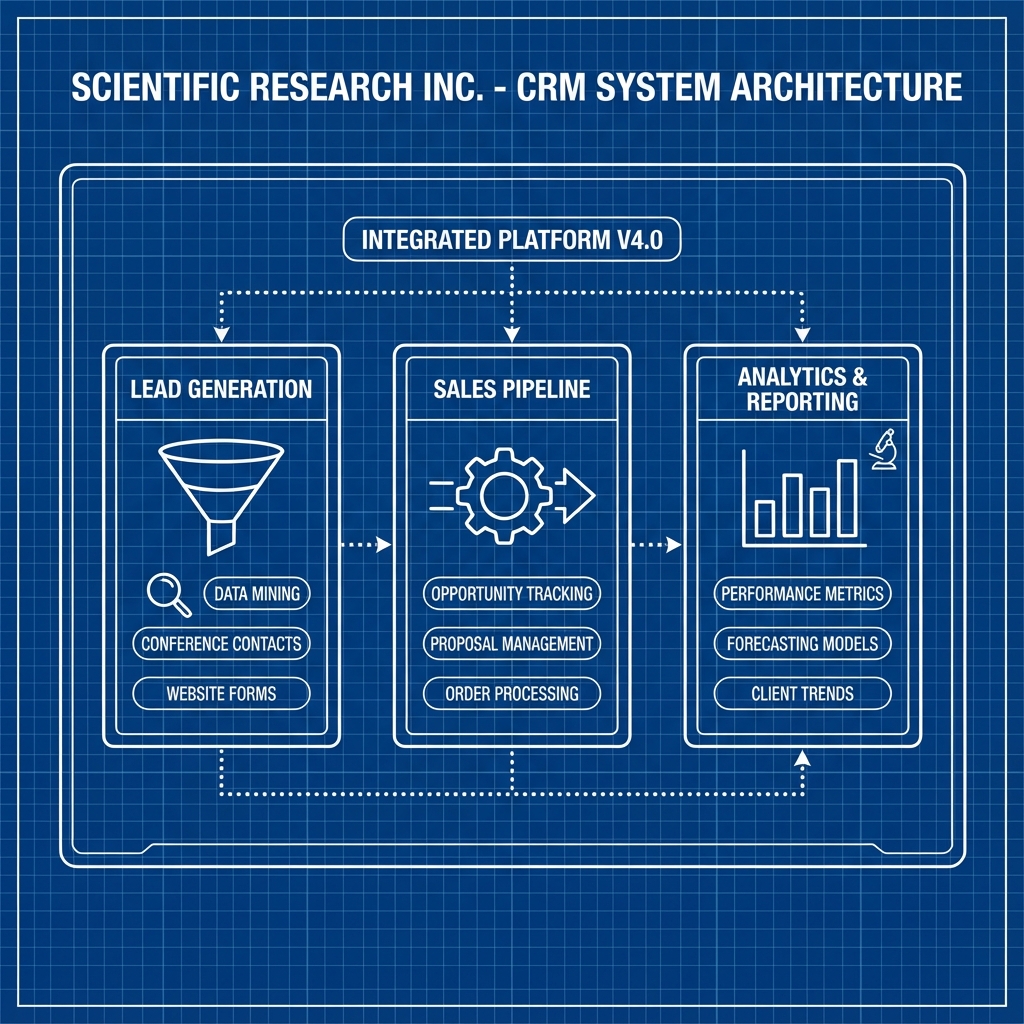
Before you create a single user account, you need to map your reality. How do you actually sell? What does a "lead" look like? What are the specific stages of your deal cycle? What information do you fundamentally need to move a deal from Stage A to Stage B?
If you can’t draw your sales process on a whiteboard using boxes and arrows, you aren’t ready to configure a CRM. The software should simply be the digital codified version of a process that already exists and works.
The curse of mandatory fields
Most CRMs fail because they are set up by managers, not by salespeople. Managers love data. They want to know everything: source, industry, turnover, number of employees, favourite colour, inside leg measurement.
So they set up the CRM with 50 mandatory fields. To create a new contact, a salesperson has to spend ten minutes typing.
Salespeople want to sell. They view data entry as a tax on their time. If you make the "tax" too high, they will commit tax evasion. They will enter "n/a" in every box just to get past the screen. They will stop logging calls. They will keep their real prospecting list in a spreadsheet on their desktop because it is faster.
A good CRM setup is minimalist. It asks for the bare minimum data required to trigger the next action. It respects the user’s time.
Configuring for the user, not the board
Adoption is the only metric that matters in a CRM rollout. If the team doesn’t use it, the data is worthless. If the data is worthless, the reports are fiction.
To get adoption, you have to answer the salesperson’s question: "What is in it for me?"
If your CRM is just a tool for the Director to spy on activity, nobody will use it. But if the CRM gives value back, they will fight to use it.
Give value back through automation. "If you log this call, the system will automatically send the follow-up email for you." "If you move this deal to 'Proposal Sent', the system will automatically generate the PDF contract."
When the system works for the salesperson, rather than just taking data from them, adoption becomes natural.
The "garbage in" problem
We all know the phrase "Garbage In, Garbage Out." But in CRM terms, accuracy is a function of ease.
If your system is hard to use, the data will be bad. Use picklists instead of free text fields to ensure consistency. Use validation rules to prevent obvious errors (like a deal value of £0). Automate data enrichment so the rep doesn’t have to Google the company address; the system should find it for them.
Clean data isn’t just about being neat. It’s about trust. If a sales rep can’t trust the phone number in the CRM, they will stop using the CRM to make calls.
Conclusion
Don’t buy a CRM to "get organised." Get organised, then configure a CRM to support that organisation.
The best CRM in the world isn’t the most expensive one. It isn’t the one with the most features. It is the one your team actually uses.
TL;DR
- Map Reality: Draw your process on paper before you touch the software settings.
- Minimalism: Only ask for data you will actually use. Delete every field that isn't critical.
- WIIFM: Build automations that save salespeople time. That is how you buy their loyalty.
- Validation: Make it easy to be accurate and hard to make mistakes.
- Adoption: If the team hates it, the project has failed. Configure for the user, not the manager.
Is your CRM a graveyard of bad data?
We re-architect CRM systems to align with how businesses actually work. Let’s turn your database into a revenue engine.