

The "digital brochure" trap
If we visit your company’s website right now, does it actually do anything?
We don’t mean does it scroll smoothly or have a nice animation on the homepage. We mean does it perform a function for your business? Can a customer check if a product is in stock without emailing you? Can a long-standing client download their invoices without calling your finance team? Can a prospect book a meeting directly into your calendar without a three-day email tennis match?
For the vast majority of SMEs, the answer is no. Their website sits there, looking presentable, listing services, and waiting for someone to fill in a contact form. It is a digital brochure. It’s a slightly interactive PDF that lives on the internet.
In 2025, that is a wasted asset. It is like buying a high-performance server and using it as a doorstop.
Your website is the only piece of software you own that is available to your customers 24 hours a day, 365 days a year. It never sleeps, it never takes a holiday, and it doesn’t need a pension plan. It should be working harder than your best salesperson. It should be the backbone of your operations, not just a poster on the digital wall.
From marketing channel to operational asset
The problem usually starts with ownership. In most companies, the website belongs to Marketing. Marketing’s job is to generate leads, so they build a site designed to attract strangers. They focus on SEO, pretty imagery, and persuasive copy.
These are all important things. But they are only half the story.
When you shift your mindset from "Marketing" to "Operations," the role of your website changes completely. It stops being solely about brand awareness and starts being about service delivery. It moves from being a billboard to being a terminal.
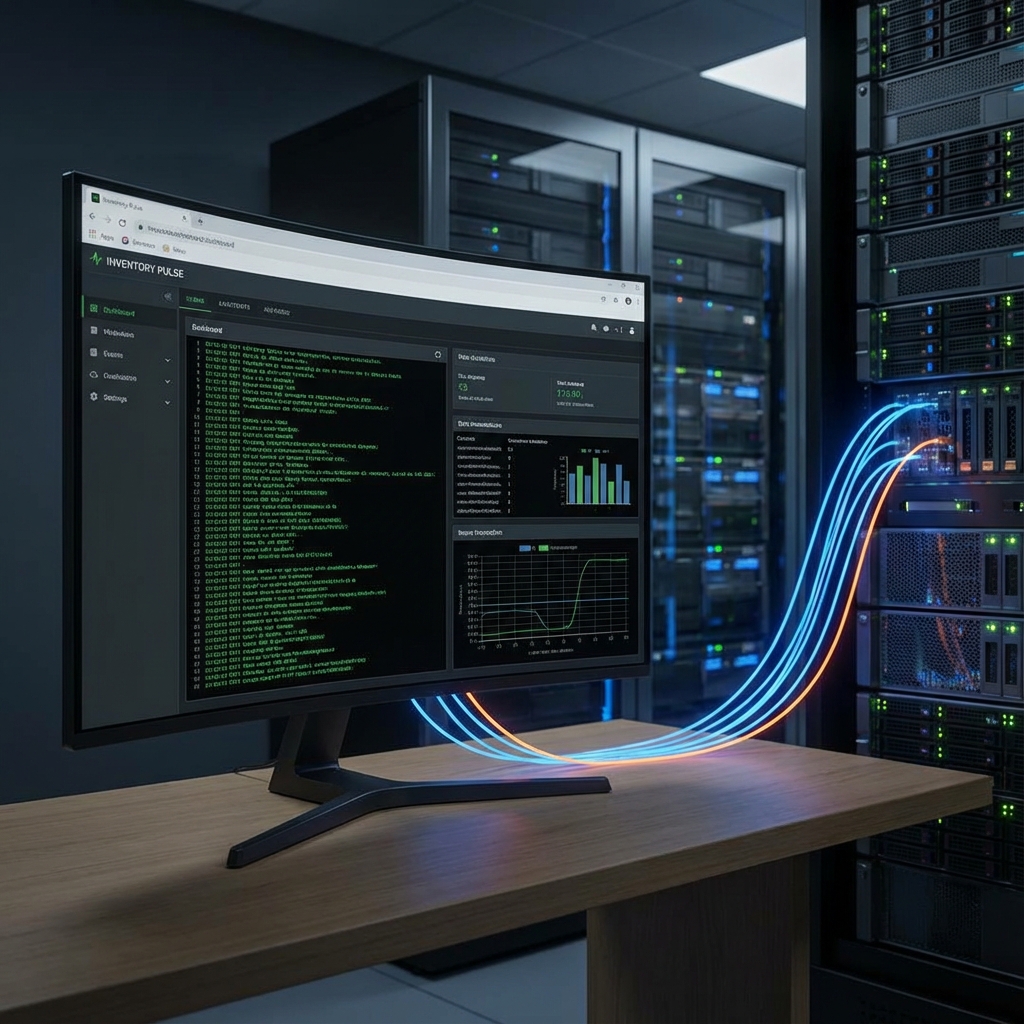
A "backbone website" connects to your internal systems. It is the public-facing interface of your business logic. It doesn’t just say "We have stock"; it pulls live inventory levels from your ERP to show exactly what is available. It doesn’t just say "Contact Support"; it lets customers log a ticket directly into your helpdesk and track its progress.
This isn’t just about making things look fancy for the customer. It is about brutal internal efficiency. Every time a customer answers their own question via your website, you save money. Every time a client self-serves a document that they would otherwise have emailed you for, your team gets five minutes of their life back.
The friction of disconnected sites
Let’s look at a typical scenario in a technical SME. You sell specialist equipment or complex services. A customer wants to know the price and lead time for a specific component.
In the "Digital Brochure" world, the process looks like this:
- Customer visits site. No price listed. "Call for quote."
- Customer emails sales@yourcompany.com.
- Four hours later, a sales admin sees the email.
- Admin opens the ERP to check stock.
- Admin opens Excel to calculate shipping.
- Admin types a reply to the customer.
- Customer replies: "Great, I’ll take it. Can you send a pro-forma?"
- Admin opens accounting software, creates manual invoice, saves as PDF, emails to customer.
That single transaction might have consumed 30 to 45 minutes of human time. It introduced multiple points of failure (checking the wrong SKU, typing the wrong price, attaching the wrong PDF). And from the customer’s perspective, it took half a day to buy something simple.
Now, let’s look at the "Backbone" world.
- Customer logs into their portal on your site.
- They see their negotiated pricing (pulled live from the CRM).
- They see real-time stock levels (pulled live from the ERP).
- They click "Order."
- The website pushes the order directly into your ERP for fulfilment and triggers an automated invoice from Xero.
Human time consumed: zero minutes. Points of failure: zero. Customer satisfaction: high, because they got what they wanted instantly.
The website as an integration layer
Building this doesn’t mean you need to rip out your existing systems. You don’t need to replace Sage or Salesforce or Microsoft Dynamics. You just need to stop treating them as islands.
Think of your website as the integration layer. Behind the scenes, you likely have a messy kitchen of tools using different data formats. You have legacy software that looks like it was built in 1998. You have spreadsheets that only Dave in Accounts understands. You don’t want customers seeing that mess.
Your website is the clean, polished interface that sits on top of that chaos. It takes the structured data from your messy back-end and presents it beautifully to the user. It effectively "translates" your internal complexity into external simplicity.
The "swivel chair" killer
The biggest enemy of profit in a growing SME is "swivel chair" integration. This is where a highly paid employee looks at one screen (an email order), turns their chair, and types the exact same data into another screen (the order system).
It seems harmless in isolation. "It only takes two minutes," they say. But do that twenty times a day, across five employees, and you are losing hundreds of hours a month. A backbone website kills the swivel chair. It ensures that data enters your business once, entered by the customer, and then flows automatically to where it needs to go.
Transparency Builds Trust
There is a psychological component to this as well. Transparency builds trust. When you expose real-time data to a customer, you are signalling competence.
If your website says "In Stock: 14 units," the customer trusts you. They know you have a grip on your inventory. If your website says "Contact us for availability," they assume you don’t know. They assume your warehouse is a mess. They worry that if they order, it might turn out to be back-ordered for six weeks.
In the B2B world, reliability is the ultimate currency. A system-led website demonstrates reliability before you have even spoken to the prospect. It proves that you are an organised, professional operation that respects their time.
Where to start
You don’t need to build Amazon overnight. The transition to a backbone website is best done iteratively.
Start with the single biggest friction point for your customers. Is it finding technical documentation? Build a document portal that syncs with your product database. Is it checking order status? Build a simple "Track My Order" page that queries your logistics provider.
Don’t try to solve everything at once. Pick one manual process—one thing that currently requires a human to answer an email—and build a system to handle it via the web.
Once that works, pick the next one. Over 12 months, you will transform your website from a pretty brochure into the most valuable employee you have.
Conclusion
Stop investing in websites that just look good. Start investing in websites that work. The era of the digital brochure is over for serious businesses.
When you treat your site as infrastructure, the ROI isn’t measured in "likes" or "traffic", it is measured in hours saved, errors prevented, and deals closed automatically. If your website isn’t helping you run your business, it is just an expensive billboard.
TL;DR
- Marketing vs. Operations: Stop viewing your site as just a lead-gen tool. It is an operational tool.
- Kill the Admin: Use your site to let customers self-service tasks like invoices, stock checks, and ordering.
- The Swivel Chair: If your staff are manually re-typing web orders into an ERP, you are wasting money.
- Trust: Real-time data (like stock levels) proves you are a competent, reliable partner.
- Start Small: You don’t need a total rebuild. Automate one customer pain point at a time.
Is your website working hard enough?
We build websites that talk to business systems. If you are tired of disconnected tools and manual admin, let’s turn your static site into an operational asset.